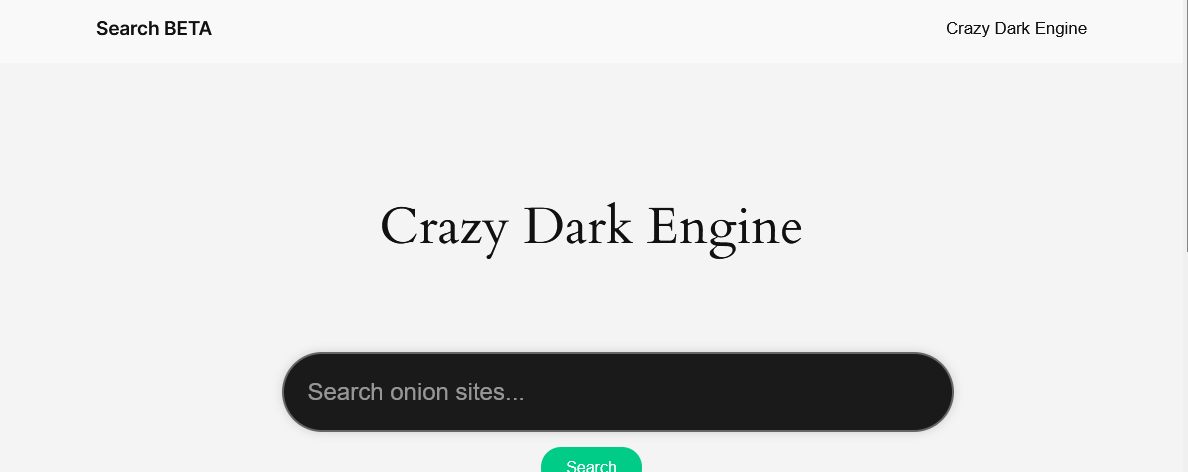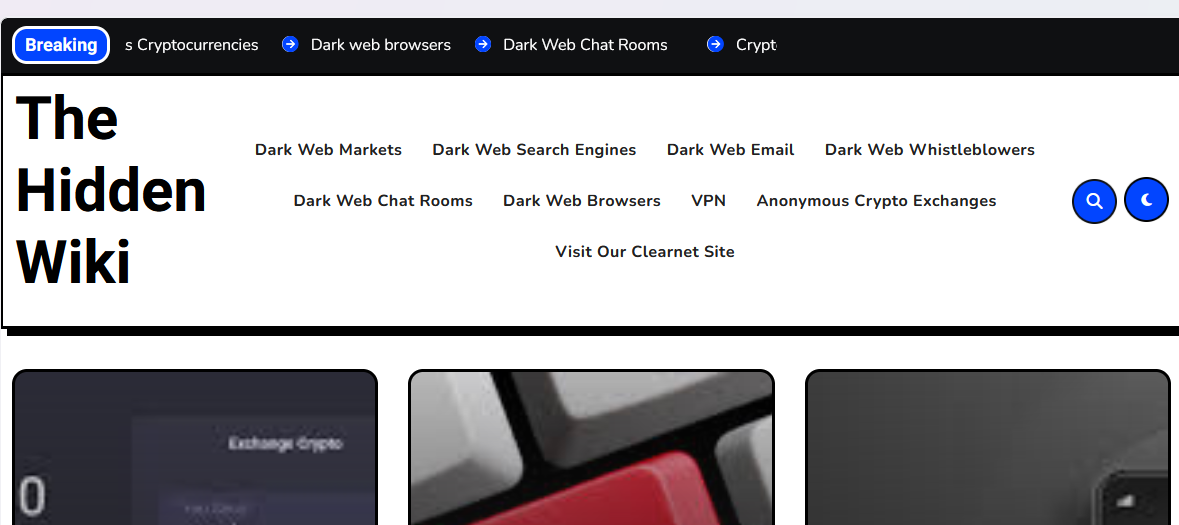




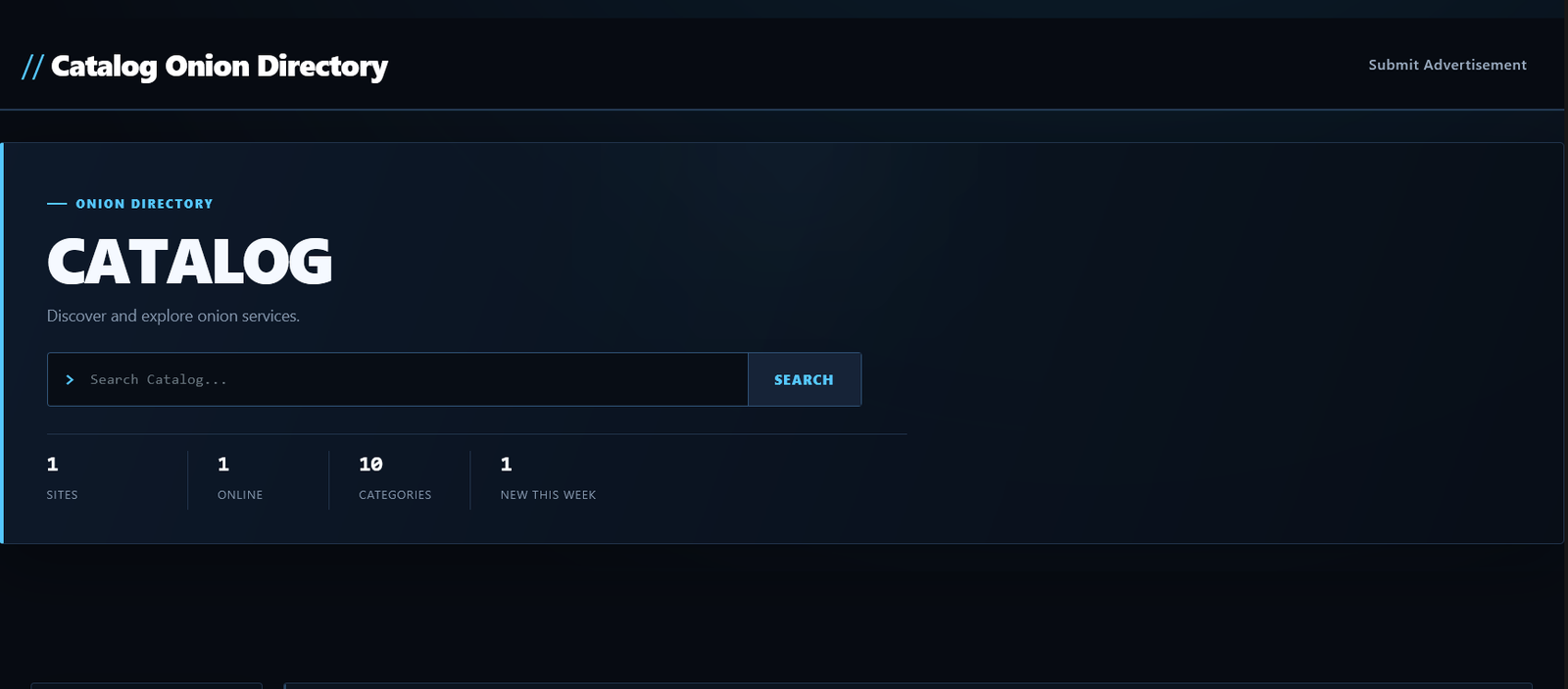
Catalog is a specialized directory on the dark web that serves as a repository for hidden services. This platform operates as a free resource, allowing webmasters to upload their services without any costs associated. Unlike the surface web, where many directories operate on subscription models or advertisements, Catalog offers an open environment that embraces the principle of anonymity and accessibility.
The primary purpose of Catalog is to facilitate the discovery and organization of various hidden services available on the dark web. These services range from forums and marketplaces to privacy-focused tools that cater to a diverse audience. By allowing webmasters to submit their services, Catalog enhances the visibility of these offerings, effectively creating a structured landscape for users navigating the often-chaotic dark web. This structured approach helps users find what they are looking for more efficiently.
In operation, the directory employs a straightforward submission process for webmasters. Therefore, the role of Catalog significantly contributes to the safety of users seeking services by ensuring that these services are easily identifiable and accessible.
In essence, Catalog stands as an essential tool within the dark web ecosystem, promoting a well-organized environment for hidden services. The accessibility it offers to webmasters and the anonymity it provides to users make it a valuable asset for anyone involved in the exploration of the dark web. As more users seek out these services, Catalog’s role is likely to expand, continuing to support the community in navigating this complex digital landscape.
The Functionality of Catalog
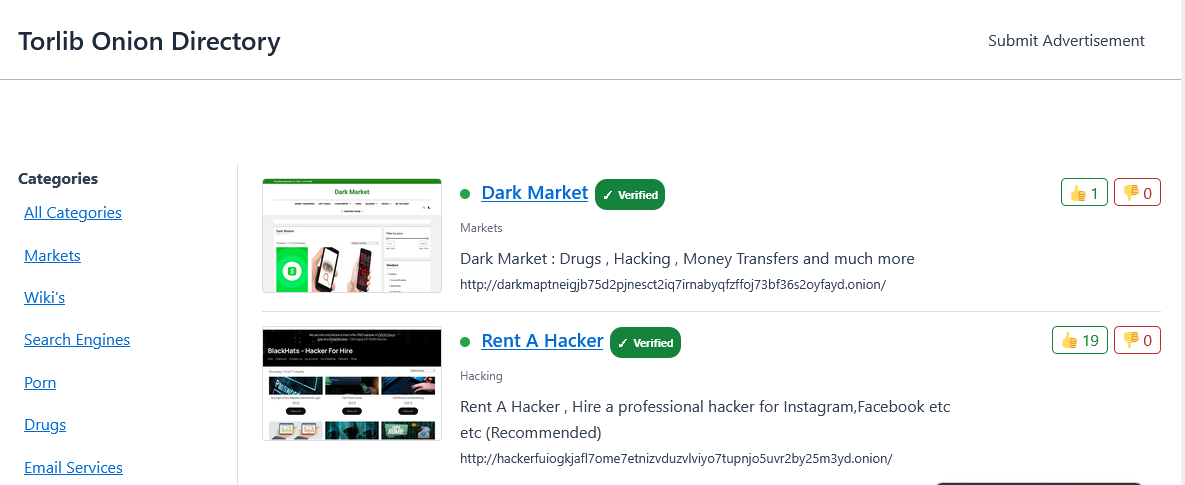
One of the standout features of Catalog is its voting mechanism, where users can upvote or downvote listed services. This participatory approach is essential for determining which services gain prominence within the directory, thereby influencing their visibility to potential users.
The upvote feature allows users to express their satisfaction with a service, providing a straightforward method for endorsing providers who meet or exceed expectations. Conversely, the downvote option serves as a critical tool for users to report subpar experiences or to flag services that may be fraudulent or unreliable. This dual voting capability contributes to a form of quality control, which is particularly vital in the often-unregulated environment of the dark web.
When users interact with the voting system, the aggregated feedback impacts the overall rating of each service. Services that accumulate a significant number of upvotes tend to receive higher visibility within the Catalog, making them easier to discover for other users. On the other hand, frequent downvoting of a service can lead to decreased visibility or even removal from the directory, depending on the voting thresholds established by the platform.
This system not only enhances the user experience by aiding in the identification of credible services but also fosters a community-driven approach to quality assurance within Catalog. As users interact within this voting framework, they contribute to a more reliable directory, thereby enhancing the overall safety and trustworthiness of hidden services listed in Catalog.
Benefits of Using Catalog for Webmasters
Catalog serves as a valuable resource for webmasters seeking to maximize the visibility of their hidden services on the dark web. One of its most significant advantages is that it offers a free platform for uploading sites, enabling webmasters to list their services without incurring any costs. This feature democratizes access to the dark web, allowing even small-scale web operators to compete with larger entities. The opportunity to showcase one’s site in an easily accessible directory can enhance discoverability among target audiences.
Catalog fosters a community-driven environment where users can engage with the listed services. This interaction not only boosts visibility but also facilitates direct feedback from potential users. As a result, webmasters can refine their offerings based on real-time insights from the community, enhancing user experience and satisfaction.
Additionally, the directory benefits from its community-oriented approach, which encourages collaboration among webmasters. By being part of a network where members share resources and insights, individuals can gain valuable knowledge about trends, best practices, and even technical assistance. Such a supportive environment can significantly aid webmasters in navigating the complexities of operating in the dark web ecosystem.
Furthermore, Catalog’s focus on niche services ensures that webmasters reach their intended audience more effectively. By categorizing and tagging services appropriately, the directory allows users to easily find relevant hidden services tailored to their specific needs. This streamlined approach to discovery is essential for webmasters looking to establish a loyal user base.
Overall, Catalog offers a multitude of benefits for webmasters, including free service uploads, increased exposure through interactive user engagement, and a robust community platform for support and networking. These elements combine to create an invaluable tool for enhancing the reach and effectiveness of hidden services in the ever-evolving dark web landscape.
Navigating the Risks of Catalog and Darkweb Directories
While exploring platforms such as Catalog can unveil access to various hidden services, it is essential to acknowledge the substantial risks that accompany their usage. One prominent concern is security; engaging with dark web directories inherently exposes users to potential threats. Malicious actors often utilize these platforms to facilitate illegal activities, leaving users vulnerable to scams, phishing attempts, and even hacking. As a result, users must maintain a high level of vigilance.
Moreover, anonymity remains a critical issue for those utilizing Catalog. Although dark web directories claim to offer a certain degree of privacy, the reality is that complete anonymity is difficult to achieve. Law enforcement agencies and cybercriminals alike may employ techniques to track users, making it crucial for individuals to employ robust security measures, such as Virtual Private Networks (VPNs) and secure browsers.
As users consider exploring the services listed on Catalog, they must be aware of the myriad of risks and the need for robust strategies to mitigate them. Engaging with hidden services without a comprehensive understanding of their implications can lead to dire consequences. In summary, utilizing Catalog and similar dark web directories requires a balanced approach, emphasizing caution, security, and awareness of the underlying risks associated with such platforms.